{e=document.createElement()

Asbestos and the Aftermath of 9/11
170,000 Pages, and a Familiar Hazard: Asbestos
Twenty-five years after the towers fell, New York City has opened a long-hidden chapter of its 9/11 records.
On September 8, 2026, Mayor Zohran Mamdani’s administration released approximately 170,000 pages of previously unreleased city records concerning the government’s response to the September 11, 2001 attacks. The records cover air quality, environmental hazards, public health, and how the city responded to concerns raised by residents and first responders. The release follows years of litigation and public-records requests by 9/11 Health Watch. The city says additional records will be released over the coming year.
Among the records, one word appears repeatedly: asbestos.
To be clear, these documents don’t prove every allegation that’s been made about the government’s 9/11 response, and the significance of any individual test result depends on context. But together, they add real evidence that asbestos and other hazardous contaminants remained in Lower Manhattan long after the towers collapsed, even as officials were publicly reassuring residents that the air was safe.
For the first responders, workers, students, residents, and others who were exposed to the dust and debris following the attacks, that history matters. Asbestos-related diseases can take decades to develop. In 2026, the health consequences of exposure that occurred in 2001 are still unfolding.
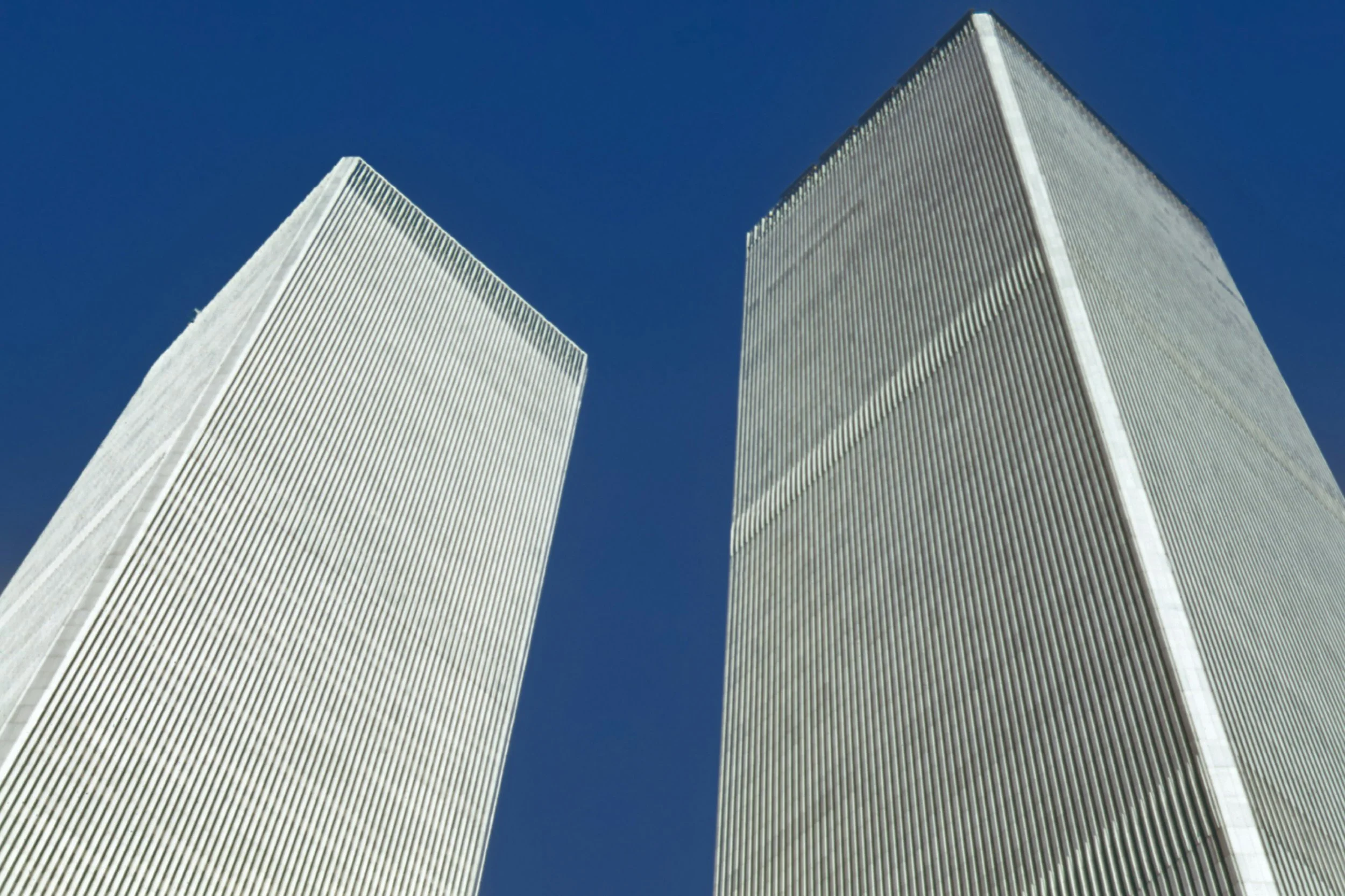
The World Trade Center towers in Lower Manhattan before the September 11, 2001 attacks.
The McKinney Memorandum
One of the most significant exposure records is an October 6, 2001, memorandum written by New York City Associate Health Commissioner Kelly McKinney.[1] The memo raised concerns about the availability of air-quality data and stated that the Department of Environmental Protection believed air quality at certain locations was “not yet suitable for reoccupancy.” It also documented concerns about the adequacy of the asbestos testing, including whether the number of samples, the types of analyses performed, and the quality-control procedures were sufficient to accurately assess the air-quality impacts of the disaster.
That internal warning came at a time when public officials were telling New Yorkers that the air was safe. The contrast between those internal concerns and the public assurances has become one of the most consequential issues surrounding the city’s response to 9/11.
The Harding Memorandum
The newly released records also include the long-sought Harding Memo, prepared in October 2001 for then-Deputy Mayor Robert Harding.[2] The memo estimated that approximately 35,000 people could potentially bring future legal claims arising from the disaster, with roughly 10,000 claims expected. It also discussed ways the city could limit its potential legal liability. The memorandum forecasted future lawsuits against New York City for “[h]ealth advisories [that] caused individuals . . . to return to the area too soon (causing toxic exposure or emotional harm)”; injuries to rescue workers who were given faulty equipment or none at all; and unsafe work practices according to OSHA, FEMA, and labor laws.
Asbestos Testing at 15 John Street
There is also evidence of asbestos that remained in Lower Manhattan months after the attacks. Records concerning 15 John Street, a building less than a mile from the World Trade Center, show that inspectors were still finding chrysotile and amosite asbestos in July 2002.[3] Reports identified asbestos on a facade ledge, the west side roof, and other locations. Although the testing did not establish that every sample exceeded applicable exposure or cleanup standards, the records nevertheless show that asbestos contamination was still being documented in Lower Manhattan approximately ten months after the attacks, after the initial dust had settled and buildings in the area had begun to be reoccupied.
The newly released records therefore add to an already substantial body of evidence showing that asbestos and other contaminants remained part of the environmental picture long after September 11, 2001.
Why Was Asbestos There in the First Place?
Asbestos was used extensively throughout the construction industry during the twentieth century because it resisted heat, fire, and chemical damage. The World Trade Center complex was no exception.
According to an EPA review of the response to the World Trade Center collapse, asbestos-containing fireproofing was present in portions of at least one of the towers. The EPA also documented asbestos-containing materials encountered during debris removal and found that asbestos-related work practices were not always followed consistently during the transportation of debris.
After the towers collapsed, building materials were pulverized into an enormous cloud of dust and debris. EPA and OSHA testing shortly after the attacks found asbestos in a number of bulk dust samples. The agencies reported that 48 of 177 bulk samples contained more than one percent asbestos, the threshold used to identify asbestos-containing material.
The environmental conditions were not limited to asbestos. The dust contained a complex mixture of contaminants, including particulate matter, metals, volatile organic compounds, dioxins, silica, and other substances. Federal assessments concluded that people exposed to extremely high concentrations of dust and its components during and immediately following the collapse were at risk for acute and potentially chronic respiratory effects.
In other words, the health story of 9/11 was never about a single contaminant. But asbestos remains particularly important because of the long latency period associated with asbestos-related disease.
The Diseases That Can Develop Years Later
Asbestos fibers are microscopic and can become airborne when asbestos-containing materials are disturbed. A person may inhale asbestos without realizing it.
The consequences may not become apparent for decades. Depending on the type and extent of exposure, asbestos has been associated with several serious diseases, including:
Mesothelioma: a rare and aggressive cancer that develops in the lining of the lungs or other organs and is strongly associated with asbestos exposure.
Lung cancer: asbestos exposure is an established cause of lung cancer, and the risk is particularly significant for people who also have a history of smoking.
Asbestosis: a chronic lung disease caused by inhaling asbestos fibers that can produce permanent scarring of lung tissue and progressive breathing difficulties.
Other cancers: including esophageal, gastrointestinal, and colon cancers can be linked to asbestos exposure.
The latency period is one of the most frustrating aspects of asbestos disease. Someone exposed in 2001 may not develop an asbestos-related illness until decades later. By the time symptoms appear, the exposure may be a distant memory.
That is why records documenting where people were, what they were exposed to, and what officials knew at the time can become so important.
Why the Disclosure Matters Today
It would be easy to look at a 25-year-old disaster and assume that the legal and medical story has already been written. It has not.
The records add to what we know about official warnings. The newly released documents provide additional evidence that government officials were discussing asbestos and other environmental hazards internally while public statements were reassuring residents that Lower Manhattan was safe. The October 6, 2001 McKinney memo is one particularly important example.
The records show that asbestos remained a concern months after the attacks. The records concerning 15 John Street demonstrate that asbestos was still being identified in Lower Manhattan in July 2002. That does not mean every location was unsafe or that every person in Lower Manhattan experienced a hazardous asbestos exposure. It does show, however, that contamination and cleanup remained ongoing well after the initial collapse.
The records provide another piece of the historical record for people who became sick. For people who later developed cancer or respiratory disease after spending time in the 9/11 exposure zone, documentation can help establish the circumstances surrounding their presence and potential exposure.
That does not automatically establish that an illness was caused by asbestos or that someone has a viable legal claim. Medical causation and legal eligibility depend on the individual facts, including the person’s diagnosis, exposure history, medical records, and the particular program or claim at issue.
The Pattern Is Familiar
Asbestos was once marketed as a miracle material. It was used in factories, refineries, shipyards, construction sites, schools, commercial buildings, and homes. Workers were routinely exposed to asbestos dust without being adequately warned about its health consequences.
The World Trade Center exposures occurred under extraordinary circumstances, but the delayed consequences of asbestos exposure are familiar. A person can be exposed without knowing it and remain healthy for decades before an asbestos-related disease appears. Records from the time of exposure can therefore become critical years later, when trying to determine where and how that exposure occurred.
An air-quality report from 2001 may matter in 2026. An employment record from the 1970s may matter when a worker is diagnosed with mesothelioma decades later. A photograph, deposition, industrial record, or government memorandum may help establish what happened when the people involved were never told that their exposure could have consequences.
The newly released 9/11 records are a powerful reminder that the history of an exposure does not end when the dust settles.
If You or a Loved One Was Exposed to Asbestos
Asbestos-related diseases can develop many years after the exposure occurred. If you worked, lived, attended school, or served near Ground Zero following September 11, 2001, and later developed an asbestos-related disease, the circumstances of your exposure may be important.
The same is true for people exposed to asbestos through their work in Louisiana and throughout the Gulf South. Shipyards, refineries, industrial facilities, construction sites, and other workplaces relied heavily on asbestos-containing materials for decades.
At the Law Office of Philip C. Hoffman, we represent individuals and families affected by asbestos-related diseases. We investigate a client’s work and exposure history, identify potential sources of asbestos exposure, and pursue the claims and compensation available under the law.
If you or a loved one has been diagnosed with mesothelioma, asbestos-related lung cancer, or another asbestos-related disease, contact the Law Office of Philip C. Hoffman for a free consultation. Understanding where and when the exposure occurred can be an important first step toward understanding what options may be available.
[1] New York City Department of Health and Mental Hygiene, Memorandum from Associate Commissioner Kelly McKinney, Oct. 6, 2001, available at https://www.loe.org/images/content/070914/MCKINNEYLETTERS.pdf.
[2] Goldstein, Letter to Robert Harding, Re: Legislative Alternatives to Limit the City’s Liability Relating to 9/11, Oct. 2001, NYC-WTC_000136670.
[3] New York City Department of Environmental Protection, Asbestos Analytical Report for 15 John Street, July 13, 2002, NYC-WTC_000094257–NYC-WTC_000094265.