{e=document.createElement()

NEW ORLEANS, La. - November 18, 2026 -The Louisiana Fourth Circuit Court of Appeal has affirmed a $9 million judgment in favor of the family of Jeannine Henderson, who died from mesothelioma after a lifetime of using Johnson & Johnson's talcum powders. The court upheld the trial court’s decision to increase the family’s damages awards, including a $4.5 million for Mrs. Henderson’s pain and suffering and $1 million for each of her two sons.
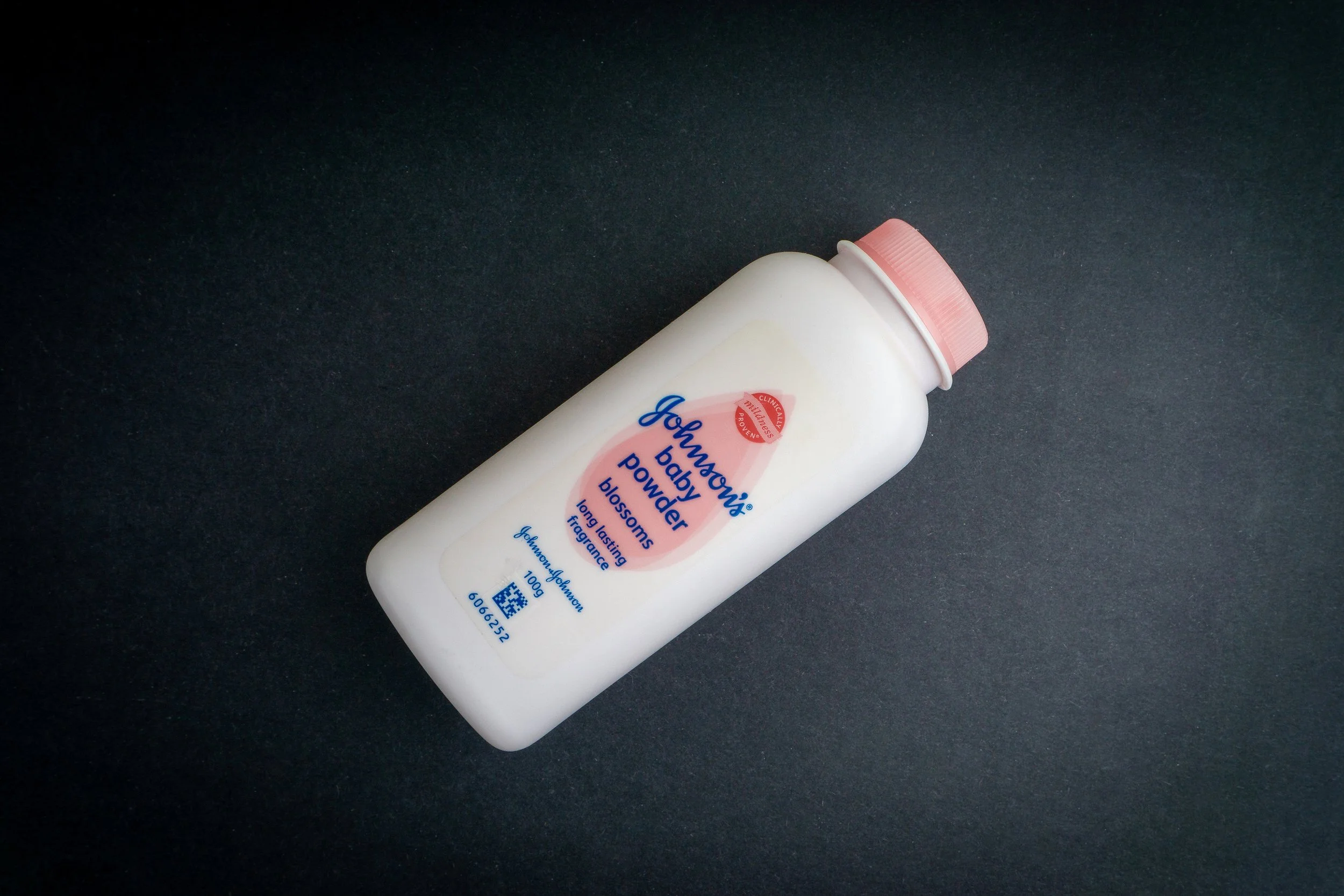
Louisiana's Fourth Circuit affirms a $9 million judgment against Johnson & Johnson in a mesothelioma talc case, upholding increased damages for the Henderson family.
The Louisiana Fourth Circuit Court of Appeal has affirmed a multimillion-dollar judgment in favor of the family of Jeannine Henderson, who died from mesothelioma following decades of alleged exposure to asbestos-contaminated cosmetic talcum powder products manufactured and sold by Johnson & Johnson.
In Henderson v. Taylor-Seidenbach, Inc., et al., Nos. 2026-CA-0208 and 2026-CA-0209, the Fourth Circuit affirmed the Orleans Parish Civil District Court's judgments against Johnson & Johnson and Pecos River Talc, LLC, including its decision to increase the damages awarded to Mrs. Henderson's family through a partial Judgment Notwithstanding the Verdict (JNOV). The Fourth Circuit rejected Johnson & Johnson’s challenges to the jury’s causation findings, the court’s jury instructions, and the increased damages awards.
PCH Law Firm attorneys Philip C. Hoffman, Dayal S. Reddy, Kelly A. Ross, and Laura E. Elkin represented the Henderson family on appeal, alongside co-counsel Lisa W. Shirley and Ka’Leya Q. Hardin of Dean Omar Branham Shirley, LLP.
Decades of Talc Exposure and a Nine-Week Trial
Mrs. Henderson was diagnosed with mesothelioma in November 2021 after using Johnson's Baby Powder and Shower-to-Shower for decades. Her use of these products began in childhood and continued until approximately 2020. Mrs. Henderson passed away in Februrary 2024 from her injuries.
Following a nine-week trial, the jury returned a verdict in favor of Mrs. Henderson's two sons, awarding $255,000 in survival general damages, $2,570,206.09 in medical expenses, and $90,000 to each son for their wrongful death claims. The jury allocated a combined 47% of the fault to Johnson & Johnson and Pecos River Talc, LLC.
The Henderson family subsequently moved for a partial JNOV, asking the trial court to increase the general damages awards based on the evidence presented at trial. On October 16, 2025, the trial court granted the family's motion, increasing Mrs. Henderson's survival general damages from $255,000 to $4.5 million and each son's wrongful death award from $90,000 to $1 million. The medical expense award remained unchanged.
Johnson & Johnson challenged the verdict on appeal, raising several arguments concerning the applicable causation standard, the jury instructions, and the damages awarded.
The Fourth Circuit rejected those arguments.
What the court decided:
The pre-1988 exposure supported the claim.
Johnson & Johnson argued that the Louisiana Products Liability Act, which took effect in 1988 and limits manufacturers' liability to the theories it lists, governed every claim. It said the family had not shown that Mrs. Henderson's exposure before the Act would have caused her disease without later exposure. The court disagreed. Under Cole v. Celotex, Austin v. Abney Mills and Walls v. American Optical Corp., a claim in a long-latency disease case vests once the plaintiff has significant tortious exposure, and a later statute cannot take that right away. Dr. Haber's testimony that her decades of daily use were a substantial factor, and that each exposure adds to the cumulative dose, met that burden. No witness had to say the pre-1988 exposure alone would have caused her cancer.
Substantial factor, not but-for.
Johnson & Johnson relied on Rando v. Anco Insulations, Inc., 2008-1163 (La. 5/22/09), 16 So. 3d 1065, which mentions but-for causation. The court observed that Rando took that language from an automobile case, and that Rando itself went on to say Louisiana courts use the substantial-factor test in asbestos cases. Under that test the plaintiff must prove that exposure to the defendant's product was significant and was a substantial factor in bringing about the disease. The jury was instructed on that standard, so omitting a but-for instruction was not error.
The other instruction challenges.
The court rejected the rest of Johnson & Johnson's attacks on the charge:
The statement that a substantial factor "need only increase the risk of harm" comes from this court's decision in Hennegan v. Cooper T. Smith Stevedoring Co., a mesothelioma case. The court acknowledged that most asbestos opinions do not use that phrase, but found it neither conflicts with nor expands the substantial-factor test.
Repeating the causation instruction four times was not error, because the charge read as a whole was balanced.
The statements that medical science has proven a causal link between asbestos and mesothelioma above background levels, and that every non-trivial exposure contributes, come directly from Pete v. Boland Marine & Mfg. Co. and Landry v. Avondale Industries, Inc.
When the jury asked what "substantial factor" meant, the judge re-read the existing instruction. That was not a new instruction requiring notice to the parties under La. C.C.P. art. 1796.
After the jury reported a 6-6 split following one hour of deliberation, the judge told it to keep deliberating. Under the totality-of-the-circumstances test in State v. Bracken, the court found no coercion.
The court also noted that the jury heard conflicting expert testimony on causation and resolved it for the family.
Medical expenses.
The trial court did not err in entering $2,570,206.09 on the verdict form for medical expenses. Dr. Haber testified that the bills were reasonable and necessary, and Johnson & Johnson did not dispute their authenticity, necessity or reasonableness at trial.
General damages.
The court first held that the JNOV was properly granted. A trial court may grant a JNOV only when the evidence points so strongly one way that reasonable jurors could not reach a different verdict. Once it does, it replaces the jury and makes its own assessment of damages. The court then reviewed the amount for abuse of discretion. Following Pete v. Boland Marine & Mfg. Co. (La. 2023), it compared the awards with prior mesothelioma cases, which it cited as ranging from $1.45 million to $5 million in general damages, and found no abuse of discretion. It pointed to Mrs. Henderson's pain and suffering, which it called "undisputable," and to the sons' testimony about their relationship with her and her death.
A Significant Decision for Louisiana Asbestos Litigation
The Fourth Circuit's decision reinforces Louisiana's established substantial-factor causation standard in asbestos litigation and provides further guidance on the evaluation of general damages in mesothelioma cases. By affirming the jury's causation findings and the trial court's increased damages awards, the court upheld a judgment recognizing both the devastating physical consequences of mesothelioma and the profound losses suffered by the family members left behind.
PCH Law Firm is proud to have represented the Henderson family throughout this litigation and on appeal. The firm's work alongside co-counsel helped secure the affirmance of the judgments in favor of the Henderson family.
About PCH Law Firm
PCH Law Firm is a New Orleans-based law firm representing individuals and families in complex asbestos litigation, mesothelioma claims, toxic tort cases, and personal injury matters. The firm is committed to holding manufacturers and other responsible parties accountable for injuries caused by asbestos exposure and dangerous products.